Studio Enigma (80's ItaloDisco) | Θαλασσογραφία (Έντ/Ροκ/Ποπ) | Vinyls Live (Classics Oldies)

Εμφάνιση αναρτήσεων με ετικέτα BIOGRAPHY. Εμφάνιση όλων των αναρτήσεων

5 Φεβρουαρίου 2015

Antonis WolfBack.. Italo Disco Euphoria !!!

Ο Αντώνης WolfBack γεννήθηκε στις 3 Αυγούστου 1972 στην Αθήνα.Αποφοίτησε απο την Σιβιτανίδειο σχολή το 1990 και αμέσως την επόμενη χρονιά ακολούθησε την θητεία του στον στρατό την οποία και ολοκλήρωσε τον Φεβρουάριο του 1993. 
Εργάζεται ως ιδιωτικός υπάλληλος και ζει στην Αθήνα. 
Μεγαλώνοντας μαζί με τις δύο μεγαλύτερες αδερφές του πρόλαβε και έζησε την αίγλη της χρυσής δεκαετίας του '80 την νυχτερινή διασκέδαση στις γραφικές discoteque, την μόδα της εποχής και σύντομα έγινε λάτρης της μουσικής βιομηχανίας. 
Οι επιλογές στα είδη μουσικής (όσο αναφορά την ξένη μουσική) ήταν πολλές και ο Αντώνης αρεσκόταν σε μερικά απ' αυτά, όπως: ambient, pop, rock, new age, new age, disco και heavy metal. 
Η ιδιαίτερη προτίμηση του ήταν η italodisco, η new age και η ballad μουσική. Όσο αναφορά την ελληνική σκηνή, έμεινε σταθερός στα λαϊκά ακούσματα.

Η ενασχόληση του με την μουσική ήταν αποτέλεσμα μιας σειράς συμπτώσεων, τον καιρό που αναζητούσε ένα χόμπυ για ενασχόληση. Ασχολήθηκε αρκετά με την ζωγραφική και την συγγραφή, αλλά την μουσική την έβρισκε αρκετά πιο δημιουργική και παραγωγική απ' όλες τις άλλες ενασχολήσεις.Ξεκίνησε το remixing την περίοδο 1986-89. Το εύνασμα γι' αυτή την προσπάθεια ήταν η απόκτηση αρκετών ηχογραφημένων κασετών που αγόραζε από κάθε discoteque επισκεπτόταν.


Εκατοντάδες samples και loops αποκόπηκαν από διάφορα hit της εποχής, μια επίπονη και χρονοβόρα διαδικασία για κάποιον που αναγκάζεται να δουλέψει με ένα πικ-απ CNC, έναν ενισχυτή Luxxman και ένα cassette recorder Scott.
 Απ' αυτή την προσπάθεια βγήκαν αρκετά remix και boot-mix διαφόρων καλλιτεχνών, όπως οι Modern Talking, Tiffany, Milly Vanilly, Falco, Bananarama, Radiorama κ.α. Υπόγραφε τις δημιουργίες του με το ψευδώνυμο Tony Wolf Back και οι πρωτότυπες κασέτες σώνονται μέχρι και σήμερα.

Στα πρώτα χρόνια της δεκαετίας του 90, ο Αντώνης άρχισε να συνθέτει την δική του μουσική με την βοήθεια ενός keyboard yamaha κι ενός tape recorder. Συγκεκριμένα επικεντρώθηκε σε ballad και new age κομμάτια και, μιας και αυτοδίδακτος, αρκέστηκε μόνο στο πειραματικό κομμάτι. Δημιουργήθηκαν αρκετά κομμάτια και διανεμήθηκαν μεταξύ γνωστών και φίλων. Ενδεικτικοί τίτλοι αυτών: “Έλα μαζί μου στα σύννεφα”, “Seranade”, “Αποχώρηση”, “Small Love Of Summer”, “Surge Of Passions”, ”0491 Summer” (του οποίου έγινε διασκευή το 2006), “Go Shoot Cupid” κ.α.

Η περίοδος 1996-2002 ήταν η εποχή της ψηφιακής μουσικής. Με την βοήθεια ενός Commodore Amiga 1200 (και έπειτα μιας Amiga 4000T) και ενός hardware sampler συνέχισε με νέες συνθέσεις με την βοήθεια ενός πληκτρολογίου, ενός ποντικιού κι ενός πικ-απ. Ηχογραφήθηκαν νέα samples και loops από βινύλιο και χρησιμοποιήθηκαν για την δημιουργία νέων εξ' ολοκλήρου μουσικών κομματιών, αυτή την φορά πιο ρυθμικών, ακολουθώντας την μόδα της εποχής στην trance και house μουσική σκηνή. Μουσικά προγράμματα που χρησιμοποιήθηκαν ήταν το Protracker και το OctaMed. Ενδεικτικοί τίτλοι: “Until the rain falls”. “TWB Medley”, DIYA remix” κ.α.

Την περίοδο 2003-2006 και με ένα PC ξεκίνησε πάλι τα remix και η όλη διαδικασία δεν θύμιζε ούτε στο ελάχιστο την δεκαετία του 80. Η συλλογή samples και loops γινόταν μεγαλύτερη, η αποκοπή τους από ψηφιακά μέσα γινόταν πιο γρήγορα και πιο εύκολα από ποτέ και έτσι, με την βοήθεια δύο και μόνο προγραμμάτων (Sony Acid και Audition) μπορούσε να μορφοποιήσει, κολλήσει και τροποποιήσει τα δείγματα ήχου όπως ήθελε. Μερικά remix ήταν τα εξής: Diux - Comet (WolfBack's 2005 Remix), Fair Control - Symphony Of Love (WolfBack's 2007 Remix), G.J.Lunghi - Acapulco Nights (WolfBack's Remix 2004), Jennifer Munday - Invisible (WolfBack's Remix 2004), M=P.B. - Co-Operation (WolfBack's Promo Remix), Michael Cretu - Samurai (WolfBack's Japan Remix 2004), Roger Meno - What My Heart Wanna Say (WolfBack's 2005 Remix), Thai Break  - Flowers In The Rain (WolfBack's 2005 Remix)κ.α.

Τέλος, ήρθε η περίοδος 2006 εώς σήμερα. Η τεχνολογία είχε ανθίσει και βοήθησε αρκετά στην παραγωγή νέων κομματιών. Νέα προγράμματα και DAW's (Digital Audio Workstations) άνοιξαν έναν υπέροχο δρόμο στην δημιουργία ψηφιακών μουσικών κομματιών. Στήθηκε ένα μίνι οικιακό στούντιο, όσο πιο απλό  γινόταν, με ένα μικρόφωνο και δύο midi keyboards, μια καλή κάρτα ήχου, έναν δυνατό υπολογιστή και μερικά βασικά προγράμματα (Propellerhead Reason, Ableton Live / Sonar, Adobe Audition, Propellerhead Record) και ξεκίνησε η δουλειά. 

Ο βασικός στόχος ήταν ότι κάθε συγχορδία, κάθε μελωδία και κάθε λούπα να είναι φτιαγμένη από το μηδέν, χωρίς να βασιστεί σε έτοιμα προσχέδια. Virtual instruments, διάφορα patches και “πειραγμένα” percussion’s έκαναν μια χαρά την δουλειά τους.
 Όλα ξεκίνησαν με το “Urgent Symbiosis”, ένα trance κομμάτι που έμεινε καταχωρημένο σε κάποιον σκληρό δίσκο. Ακολούθησαν διάφορα είδη μουσικής, όπως το μη καταχωρημένο “Surge ofPassions” και το “Limitations”. Ballads και ambient κομμάτια, όπως τα “0491 Summer”, “Lonely Wolves”, “My strong desire” κ.α. 

Παρέμεινε πιστός στην μεγαλύτερη αγάπη του, την italodisco, με κομμάτια όπως τα “Terralizer”, “Panic Attack”, Euphoria”, “Lady Disaster”, “Glass”, “Tribute for Denise”, “Mantoux” και άλλα που ήδη βρίσκονται σε στάδια mastering.
Μετά το 2010, και έπειτα από μια συναυλία ενός απ'τους αγαπημένους του καλλιτέχνες, του Jean Michel Jarre, αποφάσισε να “πατήσει” στα χνάρια του δημιουργόντας την σειρά new age “Aenaospace”.Βασικά, ετοιμάζει κομμάτια για 4 προσωπικές συλλογές:1. “Euphoria” (Italodisco)2. “Aenaospace” (New Age)3. “Imagician” (Ambient / Ballad)4. “Lumens” (Trance / Eurodance)

8 Ιουλίου 2013

Mike Oldfield Biography

Michael Gordon Oldfield (best known as Mike Oldfield) was born in Reading, England, on May 15th of 1953. Mike's dad, Ray, taught him to play guitar a little, but soon after Mike saw Bert Weedon on television he asked his dad for his own guitar, since he realized he wanted to be musician. Years later it turned out that not only this boy became a brilliant musician, but also his sister Sally, singer nowadays, or his brother, Terry, who became composer.
At the early age of 10 years he was able to compose with his acoustic guitar. This guitar became not only a music instrument, but also an evading way from his daily life, marked by a deteriorated family situation.
As a teenager, he used to practice a lot with the guitar. Sometimes he played something on folk clubs, but he also used to play electronic instrumental music with and amateur band that liked to play The Shadows songs.
In 1966 he moved with his family to Romford, in Essex. And one year later he left school to form a folk group with his sister Sally, The Sallyangie. In 1968 they record "Children Of The Sun" and the single "Two Ships", with Transatlantic discography.
In 1969 the duo disappeared and Mike returns to rock, forming Barefoot, a new band, with his brother Terry. But this group could not last so much, and soon after Mike joined as a bass player Kevin Ayers and The Whole World. There he met David Bedford, keybo1ard player, who would became a good friend of Mike.
On 1971 this group disappeared, but at the time Mike was already the lead guitar player of the group, and getting some popularity with this instrument. At this stage he was already thinking in Tubular Bells, a big symphonic piece.
He managed to record a rough home made tape that showed his idea for this piece, and send it to many record companies. However, any of them showed any interest on it, since they didn't find it commercial enough. But hopefully, one year later, he showed this tape to Tom Newman and Simon Heyworth, and these ones convinced Richard Branson (owner of The Manor recording studios) to develop the needed work.
After this, just it was needed to convince Simon Draper (propietary of Virgin records, with Richard Branson). But it was not a difficult task, since he was fascinated by the music and soon approved the project. During one week Mike was recording at The Manor, and in this time he managed to record a big part of Tubular Bells Part One. On the following months the rest of the album was recorded. Finally, on May 25th of 1973 was released, by Virgin, Tubular Bells. It was welcomed by both the critics and the public, and it became on the top charts around whole Europe
On June of the '73 he presented this masterpiece at the Queen Elizabeth Hall of London, where once again was welcomed by the public. Finally, a piece of 4 minutes of Tubular Bells was included in the popular movie The Exorcist.
Overwhelmed by the the success and the consequent responsibilities he moved to Herefordshire, where Hergest Ridge was composed, and released on August 24th of 1974. Also in this year he made some arrangements on Tubular Bells, for an orchestral version that would be recorded one year later on studio (with Mike as soloist guitarist). On the '75 his mother died, and another of his albums was released: Ommadawn. Also he received a Grammy for Tubular Bells, on the Best Instrumental Composition category
In 1976 he got a deep depression and moved to a rural house on Gloucestershire, where he composed Incantations, while Virgin released Boxed. On that time there was performances of his pieces, but he didn't play them, due to his mental problems. Then, on 1978 Incantations was finally released. He started also a therapy to try to get rid of his problems and met Diana Füller, woman that became his wife, but just for two weeks.
On the next year, recovered thanks to the therapy, he starts a tour through Europe, performing 11 concerts. This was used as a source material for release Exposed on July 17th. And this same year, on November 23rd, Platinum was released. He met and married also his second wife, Sally Cooper, and had three children: Molly, Sally and Dougal. In 1980 he made a new tour which again was used to release some material, this time a video: The Essential. He also released by the time QE2.
At the time his music is not as much popular as before, but Tubular Bells still it is. In fact, in 1981 Virgin announces the selling of 10 million copies has been reached. Mike enters then the "top Britain people" guide Who's Who, and receives the Freedom reward of London city. On the next year he releases Five Miles Out, which was quite popular on United Kingdom.
On 1983, and coincident with the 10th anniversary of Tubular Bells, Crises was released. On this year the relation with Branson gets worse, since he pretends Mike develops more commercial music, something that Mike really didn't want. However he had to complete his contract, and would release 6 more albums with Virgin.
On the following years were released Discovery (June 25th of 1984) and The Killing Fields (November 26th), a soundtrack for the movie of same name. In 1985 Virgin releases The Complete and Mike met Anita Hegerland, who became his girlfriend for several years, and with who had two more children: Greta and Noah. In 1986 he developed a video album, The Wind Chimes, and its audio version came the next year on the album Islands.
On 1989 was released his only fully vocal pop work, Earth Moving, in an agreement with Virgin to release Amarok, an only instrumental piece released on 1990, but which had no promotion. on 1991, and for finishing the contract, Heaven's Open was released and he leaves Virgin
After his period with Virgin he decided to work with WEA, and he released Tubular Bells II on 1992. He also performed a concert on Edinburgh. Two years later The Songs Of The Distant Earth was released, an album inspired by an Arthur Clarke book. This album also contained a MAC interactive track.
On 1996 he released Voyager, a Celt style album, and in 1998 he released Tubular Bells III, an album that reflects part of the life spent in Ibiza (Spain). At the time WEA released also a DVD with the concerts of Edinburgh (Tubular Bells II) and a performance of Tubular Bells III in London. A year later appeared Guitars, an album that has only guitars as instruments. Also this year appeared The Millennium Bell. And at the end of the year, he performed a concert in Berlin, The Art In Heaven, that would be released in DVD one year later.
In 2002 Virgin releases a new recompilation: Collection, at the same time that WEA Spain (Mike's new record company) promotes Mike's new work Tr3s Lunas. This album was presented at La Ciutat de Les Arts i Les Ciencies, at Valencia.
On 2003 Mike releases Tubular Bells 2003, on the 30th anniversary of Tubular Bells. This album is not a remastering of the original one, since it was arranged and recorded again. One year later a new version of Elements in DVD was released, more complete than its predecessor, Elements on VHS. He also started working with Mercury Records, an released on 2005 Light + Shade, a 2 CD album. On 2008 they released a classical work composed for orchestra, named Music of the Spheres. The last releases are reeditions of some of Mike's classic albums by Mercury Records. That was possible when the rights of Tubular Bells and other Virgin records were transferred.

30 Ιουνίου 2013

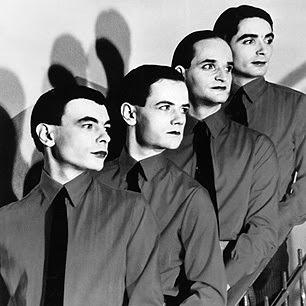
Kraftwerk - Biography

Kraftwerk's robotic, repetitive, all-electronic music influenced virtually every synthesizer band that followed in its wake. In the mid-'70s the German group literally invented the man-machine sound and image. 
In 1970 Ralf Hütter and Florian Schneider-Esleben, who had met studying classical music at the Dusseldorf Conservatory, founded Kling-Klang Studio. Their first recorded appearance together is on 1970's Tone Float, the debut by a psychedelic kraut-rock quintet called Organisation. 
After leaving that group, Hütter and Schneider took the name Kraftwerk ("power plant") and began experimenting with integrating mechanized sounds from everyday life into music. Following numerous lineup changes, during which two members defected to form the influential kraut-rock band Neu!, Kraftwerk was reduced to a duo. After Ralf and Florian (not released in the U.S. until 1975), the pair added Klaus Roeder and Wolfgang Flür.
They found immediate success with their first U.S. release, Autobahn, which went Top 5. The requisite hit was an edited version of the 22-minute minimalist title track about a monotonous journey along the famed German–Austrian superhighway. Kraftwerk's next two LPs were paeans to such other modern-world wonders as the radio (Radio-Activity) and the train (Trans-Europe Express). 
David Bowie cited Ralf and Florian as an influence for his Low and "Heroes" albums. (There is some evidence that Bowie's "V-2 Schneider" is a tribute.) Kraftwerk confirmed its cold, conceptualist image with "Trans-Europe Express" and "Showroom Dummies," both of which became late-'70s disco hits. In 1977 the group toured the U.S. playing electronic instruments and dressed in mannequin outfits. The members later threatened to tour by sending over robots in lieu of themselves while they rested in their studio.
The Man-Machine featured more accessible music. Kraftwerk then disappeared for three years, not emerging until 1981 with the pop-oriented Computer World (#72, 1981), which stayed on the U.S. chart for 42 weeks and produced a #1 U.K. single, "The Model." Meanwhile, the "Trans-Europe Express" melody and the rhythm of "Numbers" made their way into rap, on Afrika Bambaataa's "Planet Rock." After 1986's Electric Café, Kraftwerk kept a relatively low profile, releasing only a best-of, The Mix.
Thanks to the flood of new techno, ambient, and experimental electronic sounds, in the '90s a new set of fans embraced Kraftwerk's catalogue and its ideas. The band headlined the U.K.'s Tribal Gathering concert in 1997 and has played select live dates, festivals, and raves. In 1999 the world exhibition organization Expo 2000 commissioned Kraftwerk to record "Expo 2000," the event's theme song. It doubled as a single.
This biography originally appeared in The Rolling Stone Encyclopedia of Rock & Roll (Simon & Schuster, 2001).

2 Ιουνίου 2013

ΒΙΟΓΡΑΦΙΚΟ "ΟΛΥΜΠΙΑΝΣ"

Το συγκρότημα δημιουργήθηκε τον Σεπτέμβριο του 1965 στην Θεσσαλονίκη από τους'Αλκη Κακαλιάγκο (πιάνο-hammond organ) μέλος των "VIPS",και τα μέλη του διαλυθέντος συγκροτήματος των "BRAHMS"Πασχάλη Αρβανιτίδη (τραγούδι-μπάσο), Βαγγέλη Κουτσοτόλη (σαξόφωνο), Κούλη Καλογιαννίδη (κιθάρα), Δημήτρη Λαζαρίδη (τύμπανα), Αυτοί οι πέντε είναι οι ιδρυτές και θεμελιωτές του θρύλου των Ολύμπιανς. Πρώτες εμφανίσεις στo night-club "Χαβάη" στην Ν.Κρήνη (σήμερα νοσοκομείο ΙΚΑ) με "αφεντικό" τον Τάκη Κανίδη. 

Η νεολαία της Θεσσαλονίκης από την πρώτη στιγμή αγκαλιάζει και στηρίζει με την αγάπη της το συγκρότημα. Ο Γιώργος Κοντόπουλος (ραδιοφωνικός παραγωγός) με τα μαγνητόφωνα του ηχογραφεί ζωντανά τους Ολύμπιανς σε μουσικό πρωινό στην "Χαβάη" και τους παρουσιάζει σε εκπομπή του στον Αμερικανικό ραδιοφωνικό σταθμό που λειτουργούσε τότε στην Περραία Θεσσαλονίκης.Ο 'Αλκης Στέας σε εκπομπή του στο Κρατικό ραδιόφωνο βγάζει στον αέρα την ίδια ηχογράφηση και με ζωντανή συνέντευξη των Ολύμπιανς.

Αυτή την εκπομπή την ακούει ο Γιάννης Σωκρατίδης τότε διευθυντής του υποκαταστήματος στην Θεσσαλονίκη της Δισκογραφικής εταιρείας "Ελλαδίσκ" ο οποίος ενθουσιάζεται και ανοίγει τον δρόμο για να ηχογραφηθούν στην Αθήνα (Δεκέμβριος 1965), με παραγωγό τον Γ.Ράλλη, το πρώτο σαρανταπεντάρι δισκάκι με τον "Τρόπο" και το "Συμπόσιο".Αποτέλεσμα την επιτυχία και αναγνώριση σ'όλη την Ελλάδα. Σημαντικός σταθμός η πρώτη εμφάνιση των ΟΛΥΜΠΙΑΝΣ στην Αθήνα στις 2 Οκτωβρίου1966 στην "Χρυσή Βραδυά" σε μια μεγάλη πολύωρη συναυλία στο κατάμεστο Παναθηναικό Καλλιμάρμαρο Στάδιο όπου σμμετείχε όλο το μουσικό κατεστημένο της εποχής.

Επίσης διεξήχθη ένας διαγωνισμός νεανικών μουσικών συγκροτημάτων όπου οι Θεσσαλονικείς ΟΛΥΜΠΙΑΝΣ πήραν το 78% το ψήφων της Αθηναικής νεολαίας,''.....αυτό ήταν κάτι που έφτανε τα όρια ενός σκανδάλου.'Ενα απρόβλεπτο συγκρότημα από τη Θεσσαλονίκη ,τσάκιζε τα καλύτερα συγκροτήματα της Αθήνας -και μάλιστα μέσα στην έδρα τους!......" (απόσπασμα από το βιβλίο ''Ελληνικό Ροκ'' του Μανώλη Νταλούκα). Η πρωτοφανής επιτυχία των "Ολύμπιανς", για τα δεδομένα εκείνης της εποχής. μπορεί να αιτιολογηθεί ως εξής.Πάντα οι νέοι θέλουν να έχουν την δική τους μουσική. Ο χορευτικός ρυθμός που συγκινούσε τότε (1965) ήταν το σέικ. 

Οι "Φόρμινξ", που προηγήθηκαν των "Ολύμπιανς", έπαιζαν μεν μοντέρνα χορευτική μουσική, αλλά "σνόμπαραν" τον ελληνικό στίχο. Και γενικά όλα τα συγκροτήματα εκείνης της εποχής έκαναν το ίδιο, η τραγουδούσαν στα ελληνικά με ξενική προφορά...."Από τη βραδυά εκείνη,όλα τα συγκροτήματα αναθεωρούν την στάση τους .'Ολοι αρχίζουν να γράφουν τραγούδια με ελληνικό στίχο η...... διασκευάζουν ξένες επιτυχίες στα ελληνικά...." (απόσπασμα από το βιβλίο ''Ελληνικό Ροκ'' του Μανώλη Νταλούκα). 

Η καθαρή και ειλικρινής άρθρωση του Πασχάλη σε μελωδίες με ελληνικό στίχο, σε μουσική με "ευρωπαικό άκουσμα" σε σύγχρονους μοντέρνους χορευτικούς ρυθμούς έκανε να σκιρτίσουν οι καρδιές όλων των νέων, και να χαρίσουν όλη τους την αγάπη στο συγκρότημα και ακόμη να την μεταφέρουν και στις επόμενες γενιές. Αποτέλεσμα όλα τα νεανικά ροκ συγκροτήματα άρχισαν να ηχογραφούν την μουσική τους πάνω σε ελληνικό στίχο,και μέχρι σήμερα όλα τα ροκ συγκροτήματα ακόμη και τα πιο.....σκληρά τραγουδούν ελληνικά. Ακολουθεί το "Συγνώμη" με στίχους γραμμένους από τον Ν.Ελληναίο, το "Σχολείο" και η δημοτικότητα του γκρουπ ανεβαίνει στα ύψη. 

Στρατιωτική θητεία, σπουδές και άλλες οικογενειακές υποχρεώσεις απεμάκρυναν κάποια ιδρυτικά μέλη από το συγκρότημα. 'Ετσι πολλοί καλοί μουσικοί που εν συνεχεία διέπρεψαν στο μουσικό στερέωμα πέρασαν από τους "Ολύμπιανς" όπως οι Βασίλης Παπαβασιλείου (μπάσο-τραγούδι), Νίκος Παπάζογλου και Γιάννης Καρατζόγλου (τραγούδι), Παντελής Δεληγιαννίδης (κιθάρα), Γιώργος Ζηκογιάννης (μπάσο), Νίκος Αρχοντής (βιολί-σαξόφωνο), Αντώνης Θεοδωρόπουλος (σαξόφωνο), Πάνος Λεμονίδης (ντράμς), Νέστωρας Δάνας (κιθάρα), Βαγγέλης Κιτσικόπουλος (κιθάρα-τραγούδι), Ρούλης Πυρίλης (ντράμς). 

Το 1972 έχουν απομείνει από τα ιδρυτικά μέλη μόνο ο Πασχάλης Αρβανιτίδης και ο 'Αλκης Κακαλιάγκος. Τα μουσικά πράγματα της εποχής δεν ευνοούν την ύπαρξη συγκροτημάτων (1972). Ο Πασχάλης κατεβαίνει στην Αθήνα και ξεκινά μια επιτυχημένη σόλο καριέρα. Ενώ ο 'Αλκης Κακαλιάγκος συνεχίζει να συνθέτει μουσική, να κάνει μουσικές παραγωγές με αποκορύφωμα την μουσική επένδυση στην μεγάλου μήκους ταινία του Τάκη Κανελλόπουλου "Το Ρομαντικό σημείωμα" συμμετοχή στο 38ο Φεστιβάλ κινηματογράφου Θεσσαλονίκης 1997.

Πρόσφατη συνθετική εργασία (2012) η μουσική επένδυση του ντοκυμαντέρ "ΕΝΘΥΜΙΟΝ ΘΕΣΣΑΛΟΝΙΚΗΣ"(Memories from Thessaloniki).Μια παραγωγή της ΕΡΤ 3 στο πρόγραμμα "Ο Αιώνας της Θεσσαλονίκης"(Κ.Μπλιάτκας) για την επέτειο των 100 χρόνων (1912-2012) ελεύθερης Θεσσαλασονίκης


OLYMPIANS - ΠΑΣΧΑΛΗΣ
  Οι μεγάλες επιτυχίες 

Σχολείο
Ο Τρόπος
Συγνώμη
Ανάμνησις
Σιγά σιγά
Ο Αλέξης
Ιστορια
Το κορίτσι του Μάη
Ψεύτικη αλήθεια
Κάποτε θά 'ρθει μια μέρα
Η συντροφιά μας
Mamy blue
Λόλα
Φίλοι και αδερφοί
Ουρανέ που περνάς
Γαλάζια θάλασσα
Το τραγούδι μου
Είσαι αυτή που αγαπώ
Πώς
Μάθημα σολφέζ
Αν μια μέρα σε χάσω
Κόπακαμπάνα
Η τρομπέτα
Τώρα είν' αργά
Μη λυπάσαι
Φύγε σε παρακαλώ
Αχ! και να μπορούσα
Ήθελα
Τρυφερά
Παραδώσου λοιπόν
Κατερίνα - Κατερινάκι
Στο μπαράκι
Πες, πες, πες μου
Στα σουβενίρ
Τζοάννα
Μη με μαρτυρήσεις
Στιγμές
Άλλαξες
Εσένα που σε ξέρω τόσο λίγο
 Μακάρι

24 Μαΐου 2013

Giorgio Moroder ... The Legend !!!

Giorgio Moroder (born Hansjörg Moroder on April 26, 1940 in Ortisei, Italy) is an Italian record producer, songwriter and performer, whose groundbreaking work with synthesizers during the 1970s was a significant influence on new wave, techno and electronic music in general. Particularly well known are Donna Summer’s disco hits produced by Moroder, including “Love To Love You Baby” and “I Feel Love”. Moroder also produced a number of electronic disco hits for The Three Degrees.

Often collaborating with lyricist Pete Bellotte, Moroder scored a number of hits in his own name including “Son Of My Father” in 1972 and “From Here to Eternity” in 1977 under the name Giorgio, and in the following year releasing “Chase”, the theme from the film Midnight Express and sold well elsewhere. All were hits in the UK. The full movie score for Midnight Express won him his first Academy Award for best film score in 1978.

In 1985, Moroder worked with Phil Oakey, frontman of the popular synthpop group, The Human League, to make the album Philip Oakey & Giorgio Moroder. The following year, Moroder collaborated with his protege Harold Faltermeyer (of “Axel F.” fame) and lyricist Tom Whitlock to create the score for the popular film Top Gun (1986), with the most noteworthy hit being the Berlin classic, “Take My Breath Away”, which went on to become a huge hit for the group.

He also scored other popular films in the 1980s including American Gigolo, Flashdance, The NeverEnding Story, Thief of Hearts, Electric Dreams, Scarface and Cat People(in collaboration with David Bowie). The latter score has recently regained popularity due to its use in the popular computer game Grand Theft Auto III. Moroder’s “From Here To Eternity” and “The Chase” were also used in the Sony PSP game Grand Theft Auto: Liberty City Stories. 

In 1984, Moroder compiled a new restoration and edit of the famous silent film Metropolis and provided a new modern rock-and-roll soundtrack to the film. 
His song “Tears” was sampled and used as the basis of the DJ Shadow song “Organ Donor” on his 1996 album Endtroducing…

On September 20, 2004 Moroder was honored at the Dance Music Hall of Fame ceremony, held in New York, when he was inducted for his many outstanding achievements and contributions as producer. In 2005, he was given the title of Commendatore by Azeglio Ciampi.

In 2005, a great deal of his work (including the Cizeta-Moroder supercar he co-produced in the mid 90s with Claudio Zampolli) was used in the video game Grand Theft Auto: Liberty City Stories, and was the entire playlist of the Flashback FM radio station.

Giorgio Moroder is one of the numerous composers interested in writing the theme tune of the 2008 Bejing Olympic Games. This is not the first theme song Moroder composed for the Olympic games. “Hand in Hand” was regarded as the best ever Olympic theme song for the 1988 Seoul Olympics by former International Olympic Committee (IOC) President Juan Antonio Samaranch.

15 Απριλίου 2013

Fred Ventura - Italo Disco Star !!!

Fred Ventura East & WestFred Ventura was born Federico Di Bonaventura in Milan, Italy on 16 July, 1962. 
He became interested in music when he was twelve. 

In 1978 or ‘79, Ventura joined An Incoherent Psyche on drums. 
In 1980 he joined another band, Le Jour Prochain
In 1981 he formed State of Art with bassist Stefano Tirone and guitarist Stefano Mazzola, both formerly of Der Blaue Reiter

The band proved to be short-lived although in February 1982 they recorded a song Venice” which sounds a bit like the offspring of Joy Division and Chic (or in other words, a bit like A Certain Ratio).

"Venice" was included on a compilation titled Gathered that was released by Italian magazine,Rockerilla
"Venice," along with several other studio and live recordings were compiled and released as Dancefloor Statements 1981-82 (2012-Spittle). 

In 2009, a new line-up formed, re-recorded several old tunes and a new one which they released as At Work (2012-Killed By Disco Records). 
Less than a year after their debut performance, Ventura left the band to embark on a solo career.

Armed with a Roland Juno-60 synthesizer and an Oberheim DX drum machine (both then new to the market) Ventura pursued a dancier direction inspired by Hi-NRG pioneers Bobby O and Patrick Cowley,Neue Deutsche Welle act D.A.F.French singer Ã‰tienne Dahodisco producer Giorgio Moroder, and electro acts like KraftwerkThe Human League, and New Order.


Ventura’s new direction brought him into contact with Roberto Turatti from DiscoMagic in 1983. Along with composer Miki Chieregato, the three formed Flexx and released the epic Love Theme From Flexxy-Ball (You'll Never Change No More) and Theme from Deep.”


Inspired by Austrian singer Falco’s recent success with “Der Kommissar,” Ventura released his solo debut, the German (and English) language Zeit b/w “Hollywood Party,” in 1984. 

Ventura's final collaboration with Chieregato and Turatti was 1985’s The Years (Go By) b/w Streets (All Right).”After that, Chieregato and Turatti began formulating and focusing their energy on their Den Harrow project, which didn’t involve Ventura.

Ventura moved to Time Records, brought there by Giuliano Crivellente of the established Italo production duo Mauro Farina and Giuliano Crivellente


Ventura has been open about finding his creativity stifled by Farina and Crivellente’s perceived commercialism although he did score several hits during his relationship with them.

In 1986, he released Leave Me Alone” and “Wind of Change.” 
In 1987 he released Imagine (You'll Never Change Your Mind) and Night And Day” b/w “Jour Aprés Jour.” 
In 1988 he released “Lost in Paris” and Heartbeat b/w “Housebeat.”
Finally, in 1989 he released his solo full-length, East  West (1989-Time Records) which included most of his previous singles for Time as well as new singles It’s My Time,” and One Day” as well as album tracks Never Too Late,” No More Lies,” and Late Night Train.” 

After the 1980s ended, most Italo veterans attempted to soldier on by jumping on the commercial (and often grating) Eurodance/Euro-NRG bandwagon, Ventura began producing House music. 

He collaborated with various musicians under a variety of names including Active, Grey Area, Red Mecca, Visions Factory, Beat 4 Life, Love Nation, Vibrazioni Productions, Bedroom Rockers, and Electrique
He also went on to work as a label manager at Evolution Records, Free Zone Records, and Milano 2000 Records. More recently he’s contributed vocals to severalClone Records acts, including I-fAlden Tyrell, and Jupiter Black.